The road from Tbilisi to Kakheti loses its asphalt at the village of Sagarejo, then finds it again ten minutes later. Nobody warns you about that. Tour buses just drive through.
We make this run twice a week. What follows is the route we’d recommend to a guest with two days and an aversion to crowds — the standing version of it is our Kakheti wine tour by private chauffeur.
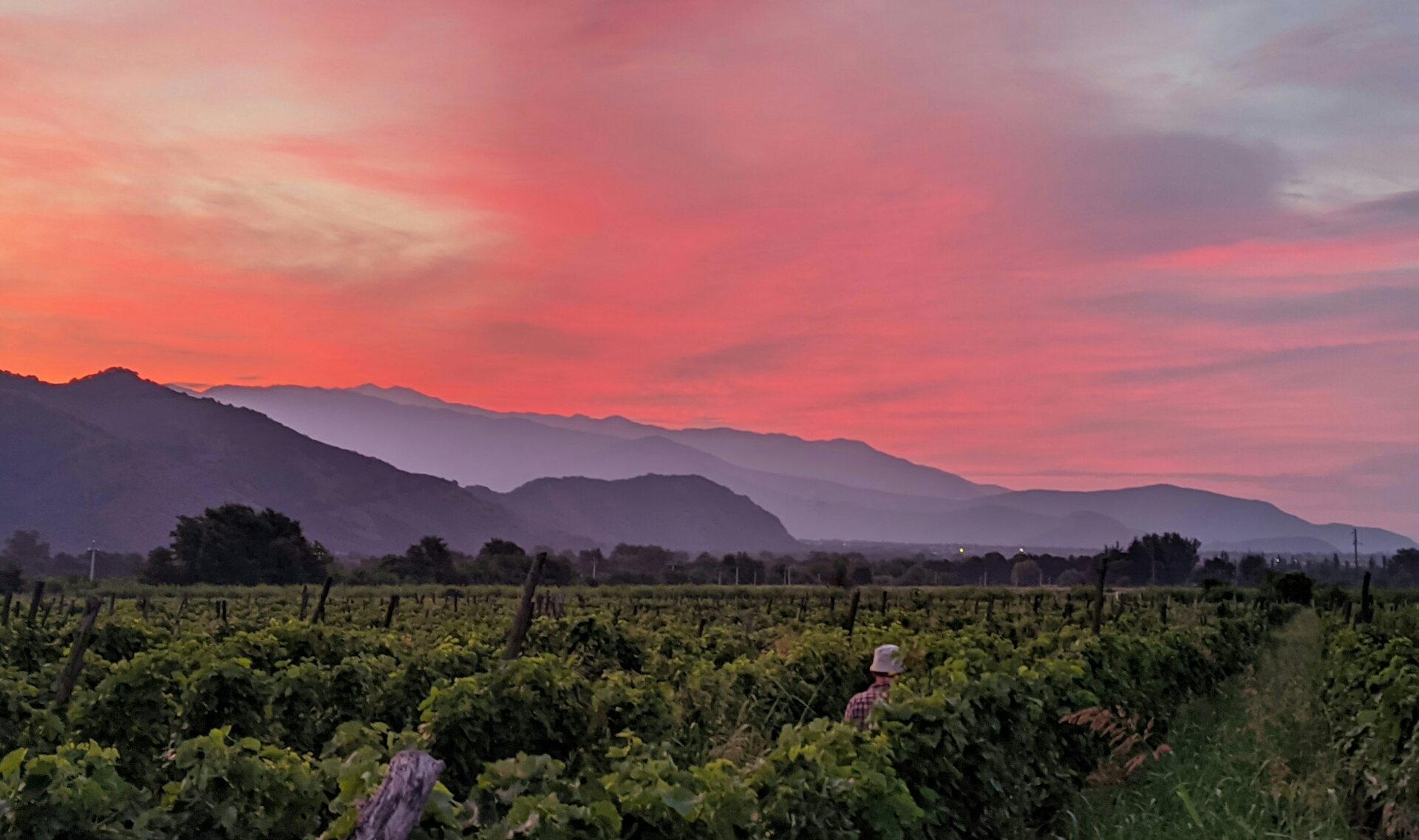 Photo: Giga Goriashvili / Unsplash.
The first hour out of Tbilisi
The Tbilisi-Telavi road is usually called a two-hour drive. Off-peak, with the right car and no traffic at the Mtskheta junction — Mtskheta itself is worth a half-day on its own trip — we run it in 75 to 90 minutes. Peak hours are weekend mornings (Tbilisi residents heading to Kakheti) and Sunday evenings (everyone returning). Avoid those if you can.
The first 40 kilometres are unremarkable. Industrial outskirts, the highway split toward Rustavi, then the climb up to the Gombori Pass. Most guests check email here. The view starts paying off after Gombori.
If your driver is right, they’ll suggest a five-minute stop at the pass for the first proper view of the Alazani valley. From this height the vineyards read as a single green field cut by the river. The mountains behind it are the Greater Caucasus, on the Russia-Georgia border, perpetually snow-streaked even in August.
Where the asphalt ends (and starts again)
Past Sagarejo the official road continues but the surface shifts. The 10-kilometre stretch between Sagarejo and Bakurtsikhe is regularly patched and re-patched. In a chauffeured car — any car we run — you don’t feel it. In a tour minibus you absolutely do.
This is the kind of detail that decides whether your day starts well or starts with motion sickness.
Sighnaghi as a base, not a stop
Most itineraries treat Sighnaghi as a 90-minute stop. We treat it as a base — and when a guest has only one day, the compressed Sighnaghi version is what we run instead.
The town sits on a ridge above the Alazani plain, walled in 18th-century stone. The walls walk in about 40 minutes. The Bodbe Monastery, the burial place of Saint Nino, is a 10-minute drive south of town. The road to it is one of the prettier short drives in Kakheti.
Most guests staying overnight in Sighnaghi sleep at Pheasant’s Tears or Kabadoni. Pheasant’s Tears is also a working winery and restaurant. It’s where John Wurdeman, an American winemaker who has lived in Kakheti for over twenty years, makes one of the more interesting natural-wine programmes in Georgia. The restaurant is good. The cellar tour, if booked in advance, is excellent.
Day-trippers usually have time for one of these, not both. If you have to pick: cellar tour with tasting if you’re a wine person, restaurant lunch if you’re not.
Three cellars worth the road
Kakheti has hundreds of commercial wineries. Most of them are not worth a special detour. Three that are:
Pheasant’s Tears (Sighnaghi). Natural-wine focus, qvevri vinification, restaurant attached. Book the cellar tour at least two days ahead.
Schuchmann Wines (Kisiskhevi, near Telavi). German-owned, professional operation, modern tasting room with valley views. Easier to book on short notice. The wines are clean and well-made; the experience is closer to a Napa visit than the village-cellar shtetl most guests come to Kakheti for. Useful if you have a guest who’s hesitant about rustic cellars.
Twins Wine Cellar (Napareuli). Family-run, brothers Gia and Gela Gamtkitsulashvili at the helm. Strong qvevri programme, museum on site explaining traditional winemaking. The drive there is also the prettiest of the three.
If you only have time for one and you want the most authentic qvevri experience, pick Twins. If your guest wants polish, Schuchmann. If they want to understand why natural wine matters, Pheasant’s Tears.
What the bus tours miss
Tour groups follow a predictable circuit: Tsinandali estate, lunch in Telavi, a “village cellar” visit (usually one of three commercial operations that take coach traffic), Bodbe, Sighnaghi for an hour. By 5pm the buses are pulling out.
What that itinerary misses:
The Alaverdi Monastery cellar. Alaverdi is one of the oldest functioning monasteries in Georgia, founded in the 6th century. The monks make wine in qvevri under the church and have done so for centuries with brief Soviet-era interruption. The tour is small, quiet, and limited to a handful of guests at a time. Coach groups can’t access it; private cars can. Book through the monastery directly or via a specialist agency.
The drive between Telavi and Napareuli. The road follows the foot of the Greater Caucasus and the light is different from the valley road. In late afternoon, with the snow line catching the sun, it’s the prettiest 30 minutes of the day.
Anywhere off the main highway in October. October is harvest season. Every cellar smells like fermentation. If you can plan your visit around the rtveli, the harvest month, you’ll see something the spring and summer visitors don’t.
Driving notes: timing, fuel, the bit nobody tells you
A few things we’ve learned from running this route over and over:
Fuel. Fill up in Tbilisi before leaving. There are stations in Sagarejo and Telavi but the major-brand stations are concentrated near the city. For a return-same-day trip, full tank covers everything.
Cellular signal. Strong on the Telavi side of Gombori. Patchy in the Alazani valley between villages. If you’re working between visits, expect 5-10 minute dead zones.
Lunch timing. Most cellars want you to stay for the tasting and a long lunch. If you’re trying to fit three cellars into one day, you need to be firm: tasting yes, full lunch no. Otherwise you’ll do two and feel rushed at both. Plan one full lunch at the most interesting cellar; tastings only at the others.
Cash for tips and small purchases. ATMs exist in Telavi and Sighnaghi but cellars and small restaurants prefer cash. ₾100 in 20-lari notes covers a day. Cards work for the bill at established restaurants.
Last driven by us: May 2026. Road conditions are current as of that date.
When to go (and when not to)
September through early November is the obvious window, and Kakheti’s international rediscovery has made those weeks busier than they were five years ago. October is harvest; book at least three weeks ahead. November after the rtveli, the cellars are quieter but still pour the new wine.
April through June is the next-best window. The valley is green, the mountains still hold snow, days are long. Cellars are between vintages but the wines from the previous autumn are at their best.
July and August are hot and the cellars are crowded with tour groups. We don’t recommend it.
December through March: weather is unpredictable, the Gombori Pass occasionally closes for snow, several cellars cut hours. Possible but not ideal.
A short closing note
There’s no good substitute for being driven through Kakheti by someone who knows the road. The tours are designed for efficiency; private trips can be designed for the day. Guests who find a day is not enough out here usually end up treating Telavi as a base rather than a stop. If you’d like a chauffeur for this route, write to bookings@soitblack.com or send us your dates and the cellars you want to see.