Not long ago the Tbilisi hotel market was a polite list. Marriott on Rustaveli, Radisson at Iveria, the Biltmore in the renovated IMEL Building. The Adjara Group properties (Rooms, Stamba, Fabrika) gave the city its design-led layer. Beyond those eight or nine names, the offering was thin enough that a concierge could memorise it in a morning.
That market is no longer that market. Georgia had 2,662 accommodation establishments with 113,470 beds in 2025, more than 105 of them opened in 2024 and 2025, and GNTA counts more than 340 more, with 38,800 beds, due between 2026 and 2029 (Georgian Tourism in Figures 2025). The Tbilisi of 2028 will hold a hospitality inventory that supports a different scale of visitor demand than the one most people picture.
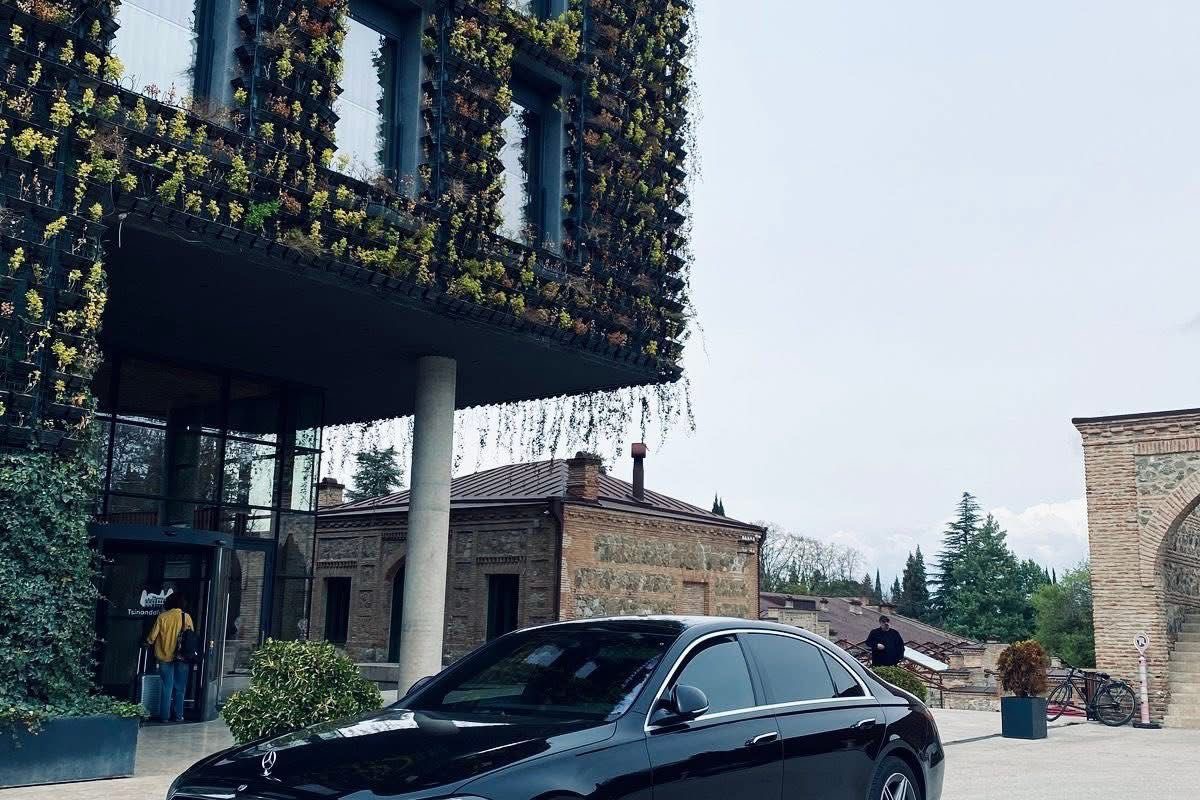
What’s already opened
Three categories of hotel already on the map are worth knowing.
The international flags. Wyndham, Best Western, Ramada and other mid-market international brands have expanded their footprints. Hilton’s local presence has grown. The Biltmore stayed where it was. The Marriott on Rustaveli has been joined by other Marriott Bonvoy properties in the wider footprint.
The design-led mid-tier. The Adjara Group (adjaragroup.com) continues to anchor this segment with Stamba, Rooms, and Fabrika. Communal Hotel Sololaki and a wave of smaller boutique openings added the design-conscious supply beneath the flag-hotel layer. The cluster around Vera, the Old Town hillside, and the river became a much-photographed hotel district.
The serviced apartments. A less-photographed category but a numerically meaningful one. Independent serviced-apartment operators and short lets serve longer-stay business and family guests, and GNTA counted 15,420 Airbnb listings across Georgia in December 2025, with more than 30,000 beds (GNTA’s 2025 overview).
What’s in the pipeline
Hotel announcements in Tbilisi run ahead of hotel openings, so treat any list of names with care. Three things are on the record.
A new Marriott brand. In September 2026 PASHA Real Estate Group and Marriott announced a planned Le Méridien in Tbilisi’s Chugureti district, with 152 rooms, several restaurants, meeting space and a fitness centre (the companies’ announcement). No opening date was given.
The national pipeline. The 340-plus establishments GNTA expects between 2026 and 2029 would add about a third to Georgia’s bed capacity, by the same GNTA count.
Independent luxury. Outside the flag system, independent luxury and design hotels compete in the same segment as Stamba and the upper-tier flag hotels. Check the opening date of any named project with the hotel itself before promising it to a guest.
Why the inventory is building
Three forces are behind the pipeline.
Visitor numbers. We cover this elsewhere in Georgia’s tourism reset. The short version: Georgia counted 6.9 million international visitor trips in 2025 and a record 5.5 million tourist trips, the visits that include at least one night, according to GNTA’s 2025 overview. More of the people counted at the border now need a bed.
Visitors from further away. GNTA counts 95.1 percent of visits from the EU, the Gulf and other non-neighbouring countries as overnight trips, against 70.6 percent from Georgia’s neighbours, by the same 2025 figures. That shift supports the five-star and upper-four-star end of the pipeline.
Who pays for it. Less of the money is foreign than the cranes suggest. Geostat records $36.3 million of foreign direct investment in accommodation and food services in 2023, $39.1 million in 2024 and $40.2 million in 2025, about 2 percent of all FDI, against $254.7 million for real estate in 2025 (Geostat). We cover the investment flows separately in Where hospitality FDI is going.
The map a concierge should hold
Tbilisi’s hotels sit in four clusters. Each cluster serves a different guest profile.
Vera and Mtatsminda hillside. Design-led, walkable to Rustaveli, the cluster where Stamba and Rooms sit. This is where the design-conscious leisure guest and the design-conscious corporate guest both land.
Old Town and Sololaki. Boutique, walkable history. Smaller properties, more atmosphere, harder porte-cochère access. The cluster for guests who want to be inside the city’s fabric.
Vake. Newer modern district. Biltmore-tier and Marriott-tier hotels. Quieter at night. The default for business guests who want calm after a long day.
Riverside and Saburtalo. Corporate, conference, high-volume, with the Radisson Blu Iveria and the Hilton Garden Inn among them. The cluster that absorbs conference visitors and the larger international groups.
The existing hotels, district by district, are covered in arriving at Tbilisi’s hotels by car. The cluster geography stays the same as new properties open; the inventory within each cluster simply grows.
Two things this changes for the chauffeur side
For concierges and corporate travel teams placing guests, two practical implications.
Corporate hotel rates are easier to get. The international brands bring the structured corporate-rate apparatus international travel managers know, and concierges placing repeat business guests can agree standing hotel rates in a way that was harder when the city’s premium inventory was thinner. The car side is set out on the corporate chauffeur page.
Group bookings become workable. Four-room and ten-room group bookings that used to be a stretch in the 2019 inventory are now an easier sell, because more of the city’s hotels can confirm a group of that size under one roof.
Both of those changes affect how multi-day chauffeur logistics around groups are planned; Multi-day chauffeur: what concierges actually need sets out the operational shape of that work.
A closing note
Georgia is growing into the destination it should always have been. If you’re coming and would like a car between any of these hotels, email booking@soitblack.com to talk about a trip.
Related: Georgia’s tourism reset, Arriving at Tbilisi’s hotels by car, Where hospitality FDI is going, and Multi-day chauffeur: what concierges actually need.