Foreign direct investment into Georgia’s hospitality sector has run consistently above $200 million per year for the past three years, according to Geostat (geostat.ge) FDI reports. In some quarters the figure has exceeded $80 million on its own. The hospitality share of total Georgian FDI sits around 12-15 percent in most quarters, which is a meaningful number for a country with as broad a foreign-investment base as Georgia has built.
Where that capital is going matters for the next decade of the country’s tourism product. The hotels, the wineries, the mountain resorts, and the second-tier development opportunities are all being shaped by who writes the cheques. This is the version of the story a corporate booker, a real estate investor, or a serious traveller would want.
The structural picture
Three categories of investor account for almost all hospitality FDI into Georgia.
International hotel chains and their financing partners. Marriott, Hyatt, Hilton, Accor, IHG, and Wyndham have all expanded their Georgian footprint through 2022-2026. The expansion model is typically a management contract or franchise arrangement with a local owning entity that holds the real-estate exposure. The capital structure on these projects usually combines international debt facilities (EBRD, IFC, regional development banks), the Georgian state’s tax incentives, and the local owner’s equity. Total committed capital across announced flag-hotel projects through 2027 is in the $500-700 million range.
Regional family offices and corporate groups. Adjara Group (adjaragroup.com) is the most visible Georgian-domiciled investor in the hospitality sector, with Stamba, Rooms, Fabrika, and a continuing pipeline. Silk Road Group operates a parallel portfolio. Several Tbilisi-based real-estate developers (Block Group, M2 Real Estate, and others) participate in hotel projects alongside their residential development pipelines. The total annual investment from this category is harder to estimate but is reported in the $100-200 million range across active projects.
Gulf, Israeli, and EU institutional capital. A growing share of hospitality FDI now comes from family offices and institutional vehicles based in the UAE, Saudi Arabia, Israel, and the wider EU. The Anaklia coastal-zone development pipeline (see The Anaklia deepwater port) is the most-watched but the city-hotel and wine-region investments are also seeing this capital flow. The investment vehicles are typically equity-heavy structures looking for the 15-20 year return profile that Georgian hospitality now offers.
Where the money lands geographically
Four regions absorb most of the inbound hospitality capital.
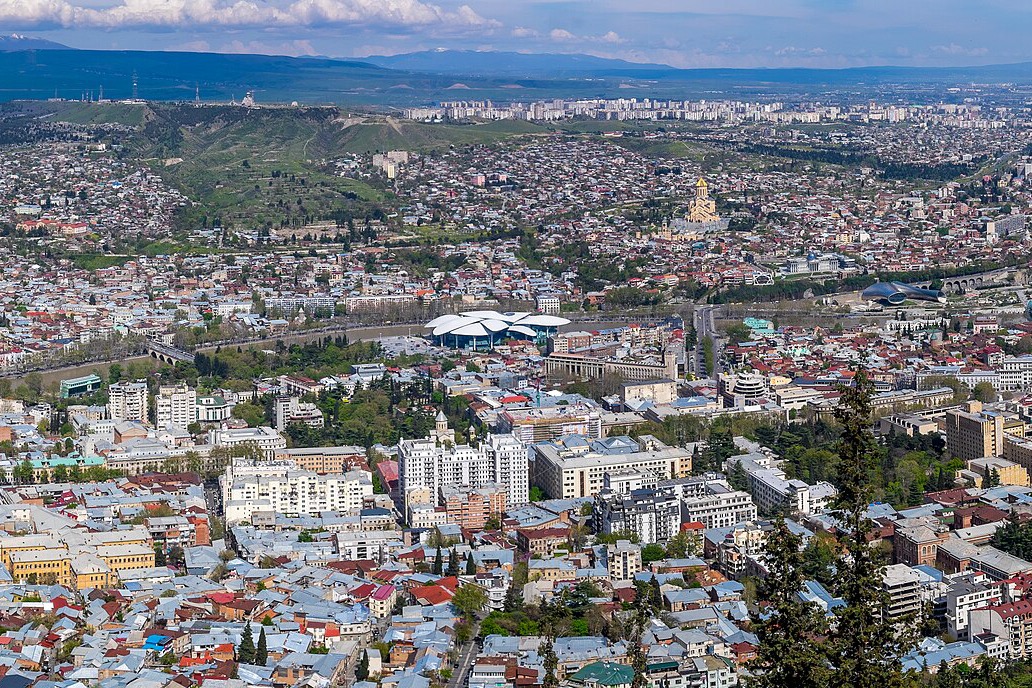
Tbilisi. The largest single share. Hotel inventory expansion is the visible part, but serviced apartments, conference facilities, mixed-use developments, and adjacent retail/F&B are also taking significant capital. The four-cluster hotel geography we map in The Tbilisi hotel pipeline gives the regional distribution: Vera, Vake, the Old Town, and the riverside conference belt. By 2027 each cluster will have absorbed multiple hundreds of millions of dollars of investment.
Batumi and the coast. The Black Sea coast received a sustained wave of investment through 2022-2026, much of it Gulf-sourced. Batumi has multiple new five-star and lifestyle properties under construction, plus expansion of the existing high-end inventory. The Anaklia development is the largest single allocation in this zone and is covered separately.
Kakheti. Wine-region investment has accelerated noticeably. Cellar-hotels, vineyard-side villa developments, and the upgrading of existing producers’ visitor facilities are all absorbing investment. The premium cellar-hotel segment (Schuchmann, Lopota, Royal Batoni) is being expanded by additional properties at similar or higher price points. See Wine tourism’s quiet revolution for the destination-side view.
The mountain resorts. Gudauri continues to expand on the ski-resort side. Bakuriani received major investment ahead of its 2023 FIS Freestyle World Championships and continues to see hotel and chairlift expansion. Goderdzi, more remote, is a longer-horizon development story. The mountain segment is mainly winter-focused but increasingly developing shoulder-season offerings.
What the second tier looks like
Below the flag-hotel and prestige-cellar level, several second-tier investment categories are worth tracking.
Boutique and lifestyle hotels in the regions. Telavi, Sighnaghi, Kazbegi, Mestia, Kutaisi, and Borjomi are all seeing boutique-property development. The investment sizes per property are smaller ($5-20 million range) but the cumulative effect is meaningful. These properties are typically a mix of regional Georgian capital and EU/Israeli investor money.
Serviced apartments and long-stay product. With the rise of long-stay Russian and Israeli relocation traffic and the growth of remote-work tourism, serviced-apartment investment has expanded through 2023-2025. Brands like the Hyatt-affiliated serviced residences plus several independent operators are growing this category in Tbilisi specifically.
F&B and restaurant groups. Adjacent to the hotel investment is a wave of restaurant-group capital. Modern Georgian cuisine has international visibility now (Tbilisi restaurants have been listed in the OAD top European rankings; some have Michelin recognition). The restaurant investment is more fragmented than the hotel investment but materially supports the destination product.
Spa and wellness. A smaller but growing category. The sulfur-bath modernisation conversation, the development of mountain-based wellness retreats, and the spa-hotel combinations being built in Borjomi and elsewhere are the visible parts.
What is not happening
Two things absent from the FDI flow worth noting honestly.
Mass-market budget hotel investment. Despite the visitor-numbers growth, the mid- and lower-priced hotel inventory has expanded much more slowly than the premium segment. Most regional Georgian visitor markets are served by guesthouses and small independent hotels rather than chain-brand mid-tier properties. This is partly because the premium-segment economics are stronger and partly because the regional Georgian operators in the lower end of the market are not seeking institutional capital.
Major airline equity investment. While flight connectivity has grown (see Tbilisi International Airport: the expansion), there is no significant foreign-airline equity into Georgian Airways or other domestic carriers. The route expansion has come through international carriers adding Tbilisi as a destination, not through equity into Georgian aviation. This may change as the new airport opens.
What this means for the hospitality buyer
For concierges, corporate travel managers, and high-end direct guests trying to predict the experience over the next five years, the FDI map tells you what to expect.
More premium hotel inventory in Tbilisi and Batumi. The 4,000-room expansion in Tbilisi specifically will reshape the booking landscape. Standing rates and corporate accounts will be easier to negotiate; group bookings will be more flexible.
Better cellar-hotel inventory in Kakheti. The investment going into the wine region means more properties at the Schuchmann/Lopota tier and a developing premium tier above it. The wine trip that we run today will look different in five years not in destination but in accommodation quality.
More structured product across the country. The maturity that the FDI brings is the structured, branded, internationally-comparable experience that high-end international travellers expect. This makes Georgia easier to sell to clients who would not have considered it a decade ago.
A closing note from the road
We drive past the construction sites every week. The cranes against the Tbilisi skyline have been there for three years and counting. Some of the buildings we now drop guests at did not exist when we wrote our last quarterly briefing for repeat concierge clients. The pace of the build is the most visible expression of what the FDI numbers represent.
Georgia is growing into the destination it should always have been. If you’re coming to see it for yourself, or to evaluate it as a market, we’ll drive you. Email bookings@soitblack.com to talk about a trip.
Related: Georgia’s tourism reset, The Tbilisi hotel pipeline, The Anaklia deepwater port, and Wine tourism’s quiet revolution.