For over a decade the Anaklia deepwater port has been the most-promised piece of Georgian infrastructure that did not exist. Successive governments announced it, partnered with it, abandoned it, re-tendered it, and announced it again. The political drama around the project obscured the underlying strategic logic: a deepwater port on Georgia’s Black Sea coast is what makes the country a serious east-west trade corridor rather than a regional curiosity.
The current construction phase, awarded to a Chinese-Singaporean consortium in 2024 and now in active build, puts the first terminal phase on a trajectory toward 2028 operational opening. The port is one of the three or four pieces of infrastructure that defines Georgia’s next decade. This piece explains what it is, what it does, and why concierges and corporate planners should care.
What Anaklia is
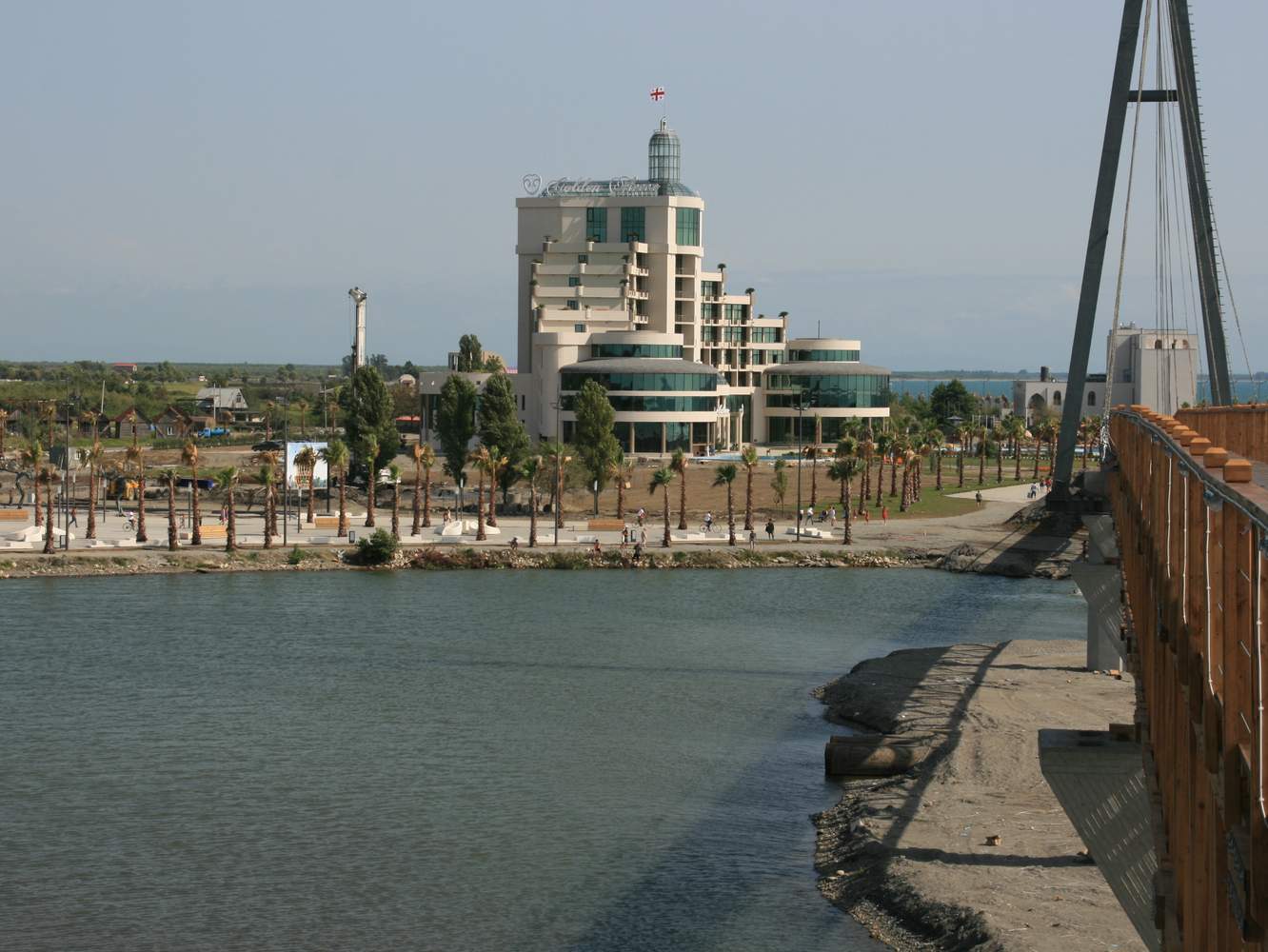
Anaklia is a coastal village on Georgia’s Black Sea coast, north of Poti and south of the Russian-occupied Abkhazia region. The site has deep natural water just offshore (over 16 metres at less than 1 kilometre out), which is the geological feature that makes it suitable for a deepwater container port. Most Black Sea ports cannot handle the largest container vessels without significant dredging; Anaklia can in its native configuration.
The full Anaklia project includes:
- A container terminal with annual throughput capacity targeted at 600,000 TEU in phase one, scaling to 5 million+ TEU at full build-out
- A multi-purpose cargo terminal for bulk and breakbulk cargo
- A passenger terminal (cruise and ferry capacity)
- Adjacent industrial and free-zone development
- Highway and rail connections inland to Tbilisi
Total project value across all phases is reported in the $2.5-4 billion range depending on which scope and timeline is referenced.
The strategic logic
Three reasons the project matters.
The Middle Corridor. The Trans-Caspian International Transport Route (TITR), often called the Middle Corridor, is the China-Europe trade route that bypasses Russia by crossing the Caspian Sea via Kazakhstan and Azerbaijan, transiting Georgia, and reaching the Black Sea. Anaklia is the maritime endpoint of this route. The TITR has gained substantial volume since 2022 as European shippers diversify away from the northern (Russian) route. A deepwater port at Anaklia transforms the route from “technically possible” to “commercially competitive at scale.”
Container capacity Georgia currently lacks. Poti and Batumi handle Georgia’s existing container traffic but neither has the depth to accept the largest container vessels. The result is that Georgia-bound containers from East Asia typically tranship through Mediterranean ports, adding cost and time. Anaklia changes this. Direct container service from East Asia to Georgia at scale becomes possible for the first time.
Strategic positioning for the country. A deepwater port turns Georgia from a transit country with limited leverage into a country with meaningful infrastructure assets on a major trade route. The economic effects of being on a major trade route compound across generations.
The history that’s worth knowing
The Anaklia story has been long enough that most international observers gave up tracking it. The honest summary:
2016. Original concession awarded to the Anaklia Development Consortium, led by TBC Holding (Georgian) with international partners including Conti Group. Construction begins on early phases.
2019. The project becomes politically contentious. Allegations of irregularities, a dispute with the Georgian state, and the criminal prosecution of TBC Holding’s principal figure (Mamuka Khazaradze) follow. The international financing partners exit.
2020. The Georgian state terminates the concession with the consortium. The unfinished construction sits idle for three years.
2023. Re-tender announced. International bidders, including Chinese, Singaporean, and Emirati consortia, express interest.
2024. Contract awarded to a Chinese-Singaporean consortium. Construction resumes on the existing partial work, with revised scope and timeline. Phase one operational opening targeted for 2028.
The 2024 award is the version of the project that is currently being built. The earlier history matters as context but not as a forecast; the operational reality is the Chinese-Singaporean consortium under the current Georgian government’s continued political support.
What it changes for the next decade
Five takeaways for the next ten years of Georgia’s growth.
Container shipping economics shift. Once Anaklia is operational, the cost-per-container for trade between East Asia and Georgia (and onward to Armenia, Azerbaijan, and beyond) falls substantially. This is not a tourist-facing effect, but it is the underpinning of the wider economic story that drives hospitality demand. Wealthier trading partners eventually generate more business travel.
The East-West Highway gets more freight. The Rikoti tunnel modernisation (details here) was sized partly on the assumption of Anaklia coming online. The road will see significantly more truck traffic in the 2030s, which has implications for travel-time forecasting on that corridor (probably slightly slower at peaks, much better at off-peak hours due to road quality).
The coastal real-estate story expands. The hospitality FDI directed at the coastal zone (details here) is increasingly anchored on Anaklia-adjacent development. The transformation of the Anaklia coast from rural village to maritime industrial-and-leisure complex will reshape what we mean by “Black Sea Georgia” for travellers.
The country’s risk profile shrinks. A deepwater port is a long-term asset that reduces Georgia’s dependence on transit through neighbouring countries. The strategic stability that comes from controlling your own port matters for the country’s broader investment climate and, indirectly, for the tourism sector that benefits from a stable country.
Anaklia itself becomes a destination. Less prominently but importantly: the cruise terminal in Anaklia, which the new construction phase includes, will give Georgia its first proper deepwater cruise port. Cruise traffic on the Black Sea, while volatile due to geopolitics, has a base level that supports a single Georgian port of call. Anaklia could carry that traffic by the end of the decade.
The travel-side implications
For concierges and travel planners, Anaklia is mostly a 2028-2030 event rather than a 2026 one. Three things to know now.
The Batumi-Anaklia coastal corridor is developing fast. The road north of Batumi up to Anaklia is in active improvement, and the hotel inventory along this corridor is growing. By 2028 the coastal-zone trip will look different than the Batumi-only trip that defines the current visitor experience.
Cruise traffic will increase. When Anaklia’s cruise terminal opens, expect cruise day-trippers as a new segment. The day-trip product (Anaklia to Batumi, Anaklia to a Kakheti winery day) will need to be developed.
The country’s economic story strengthens. This may seem indirect, but for corporate travel teams making medium-term commitments to Georgia (office leases, regional headquarter placement, conference programming), the deepwater port is one of the things that confirms Georgia’s seriousness as a long-term destination.
A closing note from the road
We drive the coastal road past Anaklia occasionally on Svaneti routes (details here). The site has been a construction zone for nearly a decade. The version under construction now is different from the previous version in a way that matters: the contractor and the consortium have the capital and political backing to finish what was started. The 2028 timeline may slip; the project will be built.
Georgia is growing into the destination it should always have been. The port is part of that growth, the long-term part. If you’re coming, we’ll drive you on the roads that get better every year. Email bookings@soitblack.com to talk about a trip.
Related: Georgia’s tourism reset, The Rikoti tunnel, Where hospitality FDI is going, and Tbilisi International Airport: the expansion.