For a country whose tourism rebound depended on opening up the regions, the single most consequential piece of infrastructure of the past five years was not an airport, not a hotel, not a free-trade agreement. It was a road.
The East-West Highway modernisation, generally referred to by its most-photographed segment as the Rikoti tunnel project, replaced the old two-lane S1 between the Rikoti Pass area and Argveta with a divided expressway running through 51 new tunnels and over 96 new bridges. The full alignment opened in phases through 2023, 2024, and 2025. What it did to travel times in Georgia is the kind of step-change that infrastructure does only once a generation.
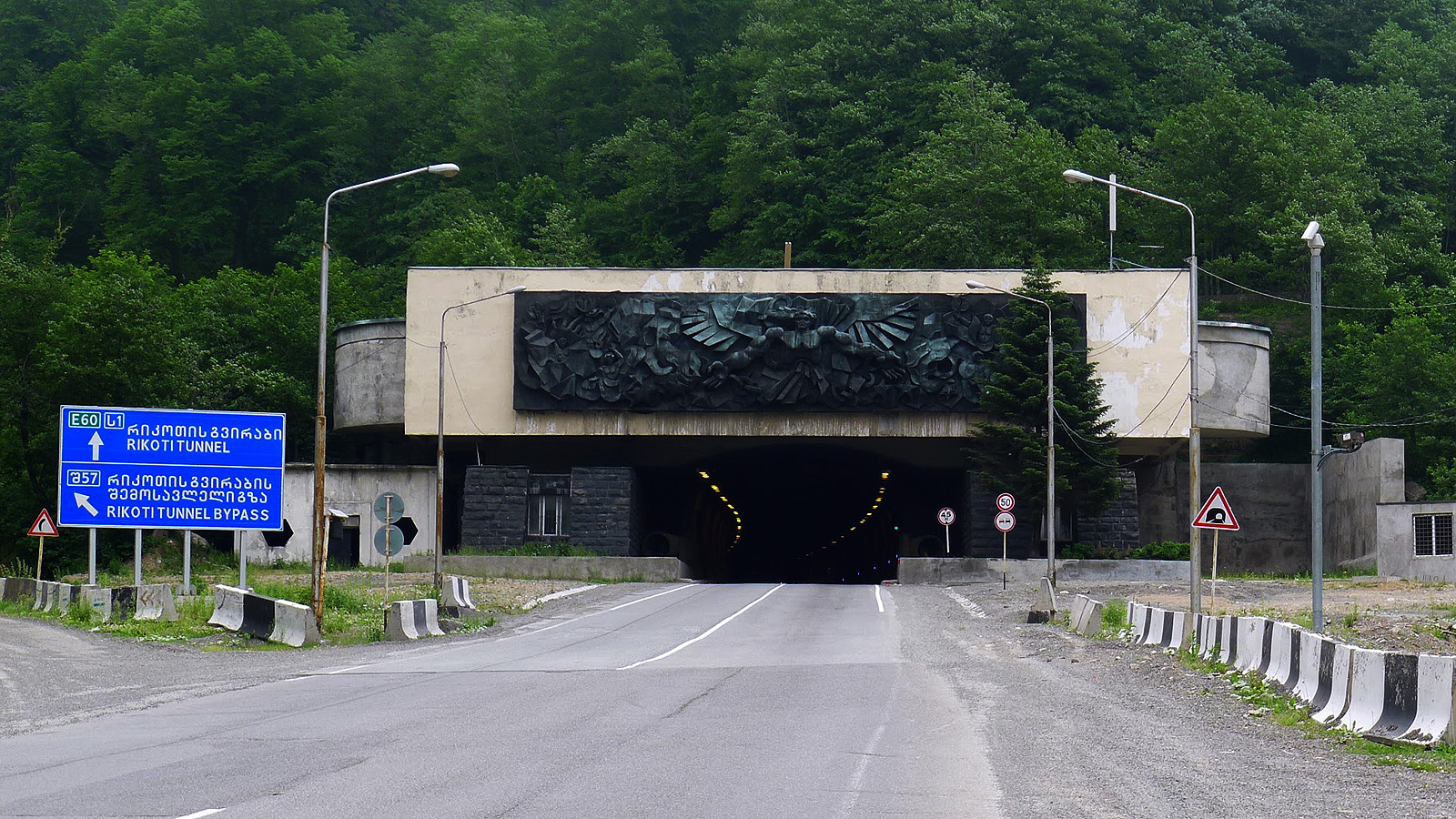
The old road
The pre-modernisation S1 climbed from the Imereti plain at Argveta over the Rikoti Pass and down toward the Khevi/Shida Kartli region on the Tbilisi side. It was scenic. It was also two lanes wide, full of truck traffic, weather-dependent, and prone to losing hours per kilometre in summer congestion.
A drive from Tbilisi to Batumi on the old road typically took seven to eight hours in good conditions, and ten or more if a truck broke down on the pass. The drive killed any same-day Tbilisi-Batumi-Tbilisi itinerary and made the country’s Black Sea coast a commitment that needed at least two nights of buffer.
That single-road constraint shaped Georgian tourism for fifteen years. The pre-pandemic version of “Georgia as a country tour” rarely combined Tbilisi, Kakheti, and Batumi in the same week. Most itineraries committed to two of the three. The road between them was the reason.
What the new road actually is
The modernised section runs roughly 51.6 kilometres from Zestaponi (Argveta interchange) east through the mountains to a point near Khevi/Kvishkheti on the Tbilisi-facing side. It is built to expressway standards: four lanes (two each direction), divided, with controlled access, designed for sustained 100 km/h driving.
Inside that 51.6 kilometres are 51 tunnels of varying length, the longest several kilometres each, and 96 bridges spanning the river valleys the old road used to wind through. The project was financed primarily by the Asian Development Bank (adb.org) and the European Investment Bank, with smaller contributions from other multilaterals and the Georgian state budget. Total project value across all packages exceeded $2 billion.
The construction took roughly a decade. The phased opening through 2023-2025 meant that the practical effect on travel times was felt progressively rather than overnight, which partly explains why the international press coverage was modest considering the scale of the change.
What changed in travel times
The numbers below are real, measured driving times we record on every trip.
Tbilisi to Kutaisi. Old road: 3.5 to 4 hours in good conditions, longer with traffic. New road: 2 hours to 2.5 hours, dependable. Saving: 90 to 120 minutes each way.
Tbilisi to Batumi. Old road: 7 to 8 hours with stops, 9+ with bad luck. New road: 4.5 to 5.5 hours, dependable. Saving: 2.5 to 3 hours each way.
Tbilisi to Zugdidi (gateway to Svaneti). Old road: 5 to 6 hours. New road: 4 to 4.5 hours. Saving: 60 to 90 minutes each way.
For the multi-day routes most affected by these saves, the cumulative effect is more dramatic than any single segment. A Tbilisi-Kakheti-Batumi loop that used to be six days minimum is now a four-day trip with no compromise. A Tbilisi-Svaneti out-and-back that used to be five days is now four. The reclaimed hours are the kind of buffer that lets a guest do one extra cellar, one extra walk, one extra night at the right hotel.
What it changed for concierges
Five practical shifts.
Same-day Tbilisi-Batumi is now possible. Not pleasant for most guests, but possible. A 7 AM departure puts a guest in Batumi by noon, gives them the afternoon and evening, and a midday return the next day. For a business guest needing to touch the Black Sea coast briefly, this works for the first time in two decades.
Tbilisi-Kutaisi-Batumi as a long single day is workable. Departures by 7 AM reach Kutaisi by 9:30, stop for sightseeing through lunch, push to Batumi by mid-afternoon. We do not recommend this shape for leisure guests but for corporate site visits it is now a single-driver day.
The Tbilisi-Kakheti-Batumi triangle works. This is the largest itinerary change. Wine country plus Black Sea coast in one week was a non-starter until the new road; now it is one of the most-requested seven-day shapes we run.
Svaneti gets one travel day shorter. The full Svaneti round trip from Tbilisi now costs four travel days instead of five. That extra day usually buys an additional Mestia evening or an Ushguli day. See Svaneti by road for the full Svaneti logistics.
The Kutaisi airport becomes more useful. Guests flying low-cost-carrier into Kutaisi (Kopitnari Airport) can now reach Tbilisi in 2.5 hours instead of 4, which makes Kutaisi a more practical alternative point of entry for budget-conscious guests on a Tbilisi-anchored trip.
What did not change
The new road did not eliminate winter weather problems. The high Caucasus passes (Cross Pass for the Military Highway, the Mestia road in winter) still close intermittently when snow hits. The Rikoti modernisation made the east-west axis dependable; the north-south mountain routes are still the seasonal variable.
The new road also did not change the experience of the regions themselves. Kakheti is still Kakheti, Batumi is still Batumi, the cellars and the beaches and the people are unchanged. What changed is the friction between them, not the destinations.
Looking ahead
Two further infrastructure projects matter for the next five years.
The Anaklia deepwater port (details here) is under construction with the goal of making Georgia a meaningful east-west cargo and passenger maritime corridor. Its completion will increase commercial freight on the East-West Highway and likely require capacity expansions over the 2030s.
The Tbilisi-Senaki-Leselidze full alignment, of which the Rikoti modernisation is the central segment, continues with smaller upgrades east of the Rikoti zone toward Tbilisi proper. These are bringing the entry-corridor from the new highway into the capital up to the same standard.
A closing note from the road
We have driven the new highway hundreds of times in the eighteen months since the last major segment opened. The drive is faster, smoother, safer, and easier to forecast. The most surprising part is the part we mention least in marketing: the visual character of the road itself. Drivers and guests both find the rhythm of tunnel-bridge-valley-tunnel quietly cinematic. The road earned its place.
Georgia is growing into the destination it should always have been. If you’re coming, we’ll drive you, on the new road that makes a wider country smaller. Email bookings@soitblack.com to talk about a trip.
Related: Georgia’s tourism reset, Svaneti by road, The Anaklia deepwater port, and Tbilisi International Airport: the expansion.