Most of what we drive guests to is east of Tbilisi (Kakheti) or north (Kazbegi, Mtskheta). The west is the direction guests forget exists, and Kutaisi is the trip that fixes that. 220 kilometres each way along the S1 highway, three and a half hours of driving each direction, and two churches in the hills outside town that are older than most of European cathedral architecture.
This is the long-day trip. Seven hours of driving for three or four hours on the ground. The right answer for the right guest; the wrong answer for most.
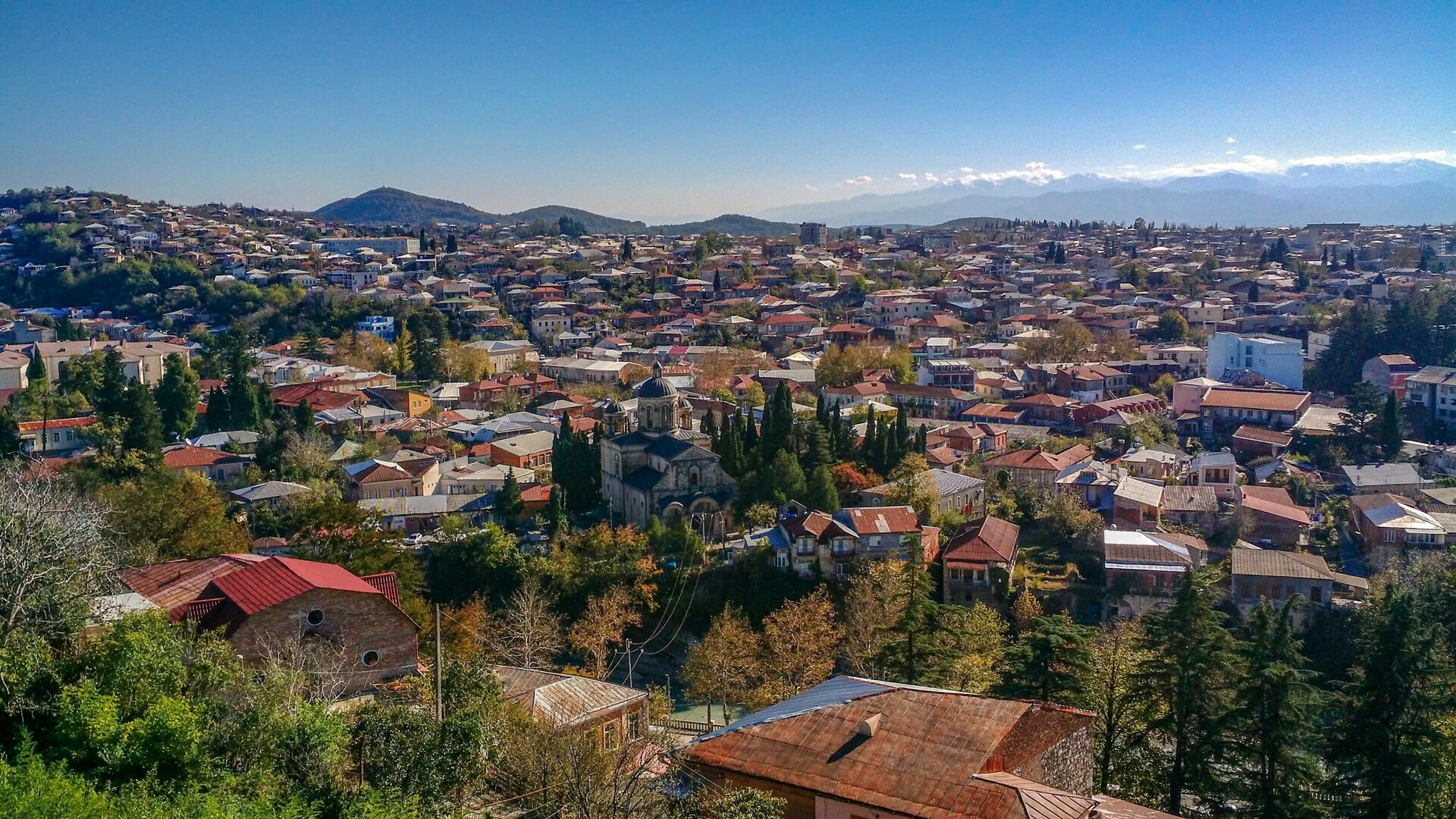 Photo: Beka Jalagania / Unsplash.
The geography
Kutaisi sits in the Rioni river valley in western Georgia, the historical capital of the kingdom of Imereti, at about 130 metres above sea level. The drive from Tbilisi is 220 kilometres on the S1, the country’s main east-west highway. Three and a half hours off-peak, four with a stop for fuel and a leg-stretch.
Two notes on the road. It is mostly good quality asphalt with one section of mountain pass (the Rikoti tunnel and approach) that has been undergoing reconstruction for years; expect the occasional single-lane stretch. The route passes Gori, Stalin’s birthplace, at the 80-kilometre mark; you can include a brief Stalin Museum stop if your guest wants it, with notes below on whether to.
The two churches that earn the drive
Gelati Monastery. Founded 1106 by King David IV (David the Builder), the cultural and educational centre of medieval Georgia, UNESCO World Heritage Site since 1994. The Cathedral of the Virgin holds 12th–13th-century mosaics, including a Mother of God with archangels above the apse that is among the few surviving large-scale Byzantine-style mosaics in the Caucasus. The complex sits on a wooded ridge eight kilometres northeast of Kutaisi; the drive up is short and beautiful.
Allow 90 minutes on site. Less if your guest is not a church person; more if they are.
Bagrati Cathedral. Originally consecrated in 1003, a coronation church of medieval Georgian kings. The cathedral was inscribed on the UNESCO list with Gelati in 1994 but delisted in 2017 after a controversial restoration that altered the original ruined form. The building is still standing, on a hill above the city centre, and still impressive at scale, even if the restoration is disputed. Worth a short visit (30 to 45 minutes); not the centrepiece anymore.
What to do with the rest of the day
The route in and out of Kutaisi can absorb one of the following without busting the schedule.
The Prometheus Caves, 20 kilometres northwest of Kutaisi. Limestone caves with a 1.4-kilometre walking route past lit stalactites and an underground river. A 60-minute add-on. Good for guests who want something not church-related.
Motsameta Monastery, 8 kilometres from Kutaisi, smaller than Gelati but with a dramatic position on a cliff above a river bend. A 30-minute stop. Pair it with Gelati if you are already in that direction.
Lunch in Kutaisi proper, at one of two or three reliable places. We pick depending on the day; the city’s older restaurants do simple Imeretian cooking well, which is different from Kakhetian and worth experiencing.
What to skip
The Stalin Museum at Gori. Controversial, frequently misrepresented to international guests, often a source of awkward conversation. We have driven guests who were glad they went and guests who regretted it. Default to skipping unless the guest specifically requests it; if they do, allow 60 minutes and brief them on the politics of the place.
Uplistsikhe. A cave town 90 kilometres west of Tbilisi, on the route. Interesting, worth a separate dedicated half-day, but bolting it onto a Kutaisi day means a 13-hour day end to end. Save it.
Timing the long day
Leave Tbilisi at 7:30 am. At Gori bypass (no museum) by 9. At Kutaisi by 11. Gelati by 11:30, on site until 1. Lunch in Kutaisi until 2:30. Bagrati at 3. On the road back by 4. Tbilisi by 7:30 pm. Twelve hours door to door.
If the guest wants the Stalin Museum or the Prometheus Caves added, the day becomes 13–14 hours; possible, but flag it on the booking brief before we quote.
When Kutaisi is the wrong recommendation
Kutaisi is the wrong day trip when the guest has not seen Kakheti or Kazbegi. It is the right trip for a guest who has done the obvious eastward and northward visits and wants to see a different part of the country, or for a guest with a specific interest in medieval Georgian architecture or the western kingdoms.
It is also the wrong trip when the weather is bad. The Rikoti pass section is slow in heavy rain; book a different day rather than push through.
Driving notes
Fuel. Tbilisi before leaving; whichever car is on the job refills at the Khashuri or Surami junction stations on the return. The Kutaisi stations are reliable but smaller.
Road. S1 throughout. Watch for the Rikoti reconstruction section; the driver will know which lane configuration is current.
Cell signal. Solid most of the route; brief drops in the Rikoti tunnels.
Toilets. Reliable at the highway truck stops in Khashuri and Surami. Gelati has facilities at the entrance; Bagrati does not.
Last driven by us: April 2026.
A short closing note
Kutaisi is the long-day trip that proves a guest has actually seen Georgia, not just the trip-advisor list. If they have the day and the curiosity, it is worth recommending. If they do not, save it for the next visit — or fold the west into a multi-day booking, where the driving spreads over three days instead of one. bookings@soitblack.com, or send us the dates.