Tbilisi International Airport handled more than 5.4 million passengers in 2025, up 13.7 percent on the year, according to TAV Airports, the company that runs it. The Georgian government puts the airport’s capacity at five million a year.
The expansion meant to close that gap was formally launched on 13 July 2026. TAV is committing about USD 150 million to take the terminal’s capacity past ten million passengers a year, and the project is due to finish as early as 2028. This is what the operator and the government say is being built, what they have not said, and how to plan an arrival in the meantime.
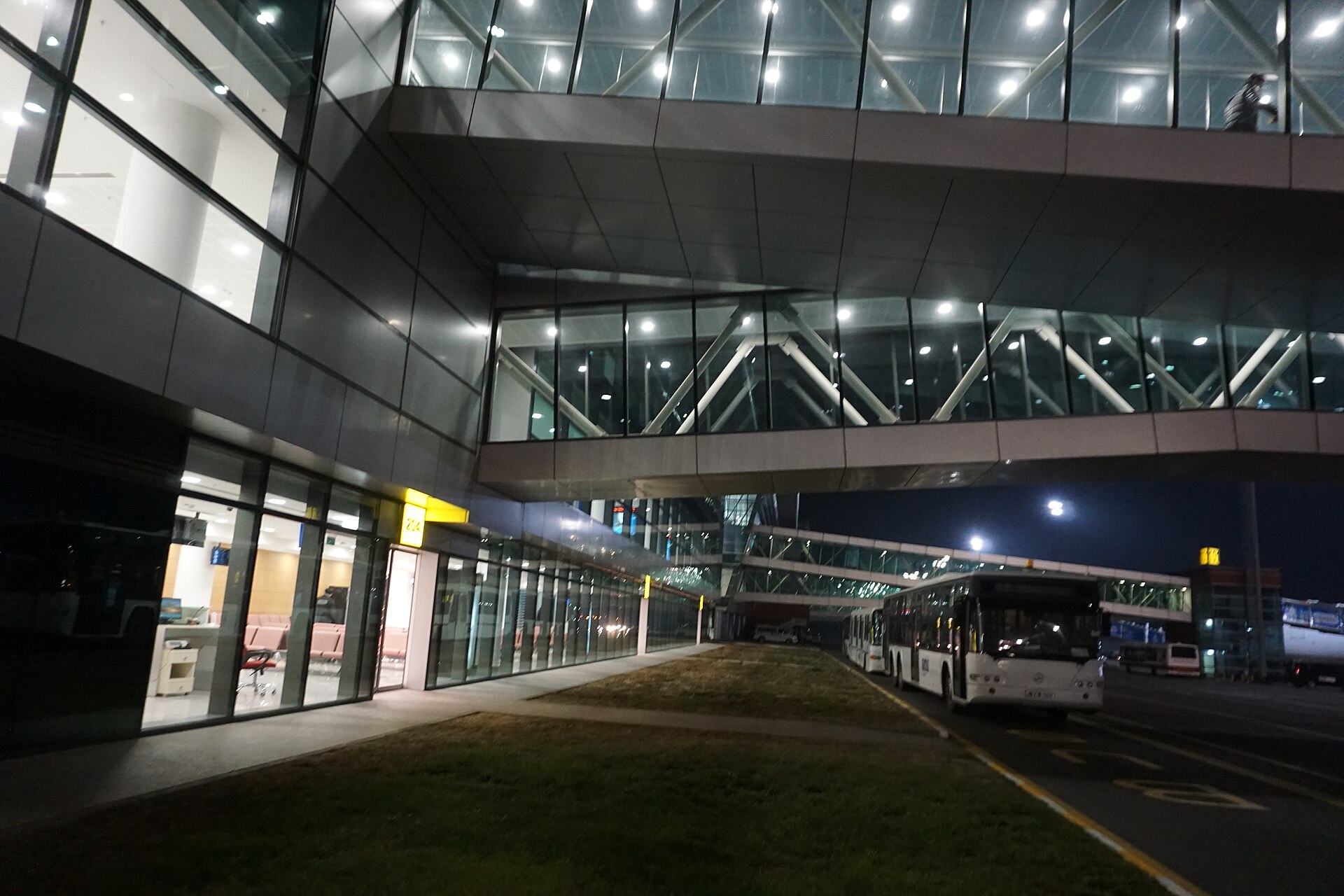
What TAV says it is building
TAV Airports, a member of France’s Groupe ADP, signed the agreement with the Government of Georgia on 16 January 2026. Its concession for Tbilisi was due to end in January 2027; under the deal the company “will invest approximately USD 150 million and extend its concession period until the end of 2031”. TAV’s announcement of the Tbilisi investment lists the works:
- 19,500 square metres added to the existing 37,500 square metres of terminal
- passenger bridges doubled to ten, and seven new remote stands for aircraft
- about ten more check-in counters, 24 more passport control counters and two more baggage carousels
- room for 500 more cars in the car park
- refurbished existing areas, and new commercial space with a focus on Georgian food and products
In July, TAV’s chief executive, Serkan Kaptan, said the company had started “terminal and apron investments” and planned to complete them “before the beginning of 2028 IATA season” (TAV’s first-half 2026 results). The government’s account of the launch, as reported by Georgia Today, gives much the same list and a 2026 to 2028 timetable.
This is an enlargement of the existing terminal, not a new airport. The building it extends came into service in 2007, according to the airport’s own history page.
Landing at Tbilisi while the work goes on
For a passenger, the counted parts of the plan are the ones that matter: more passport control counters, two more baggage carousels on top of the four in the arrivals hall today, and more room in the car park. The only completion date on offer is 2028 at the earliest. Until then, every arrival uses the existing terminal.
What TAV and the government have not published, in the statements cited here, is how arriving passengers will be routed while the work is under way. The place to check the hall as it stands is the airport’s own arrivals hall page. At the time of writing it lists passport control, with a Fast Track service available; four baggage carousels, with screens above each belt showing which one has your flight; the lost and found office beside the carousels; a signposted meeting point with an information desk; and car rental desks, currency exchange, tourist information, cafés and a 24-hour medical point. The airport’s taxi page puts the taxi rank at the kerb outside the arrivals hall.
Check those pages in the week of travel rather than a forum thread written before the work began, and give whoever is meeting the flight its number rather than a landing time. The other booking basics, such as the exact street address and payment settled in advance, are in the Tbilisi airport transfer playbook. For guests weighing a premium arrival, the piece on Tbilisi’s VIP arrivals covers when it is worth booking and when it is not.
Getting into the city, at every price
The airport puts the drive to the city centre at 20 to 30 minutes, depending on traffic.
The cheapest way in is municipal bus 337, which stops in front of the arrivals hall and runs along Rustaveli Avenue to Station Square. The airport’s bus page gives the fare as 1 ₾ for 90 minutes of travel, paid by bank card or Metro Money card, and the timetable as 06:59 to 22:59. The taxi rank runs around the clock, at a fixed 40 ₾ to the city centre and 50 ₾ to the suburbs. Ride-hail apps also serve the airport, with catches that the piece on ride-hail at Tbilisi airport sets out. For one person with hand luggage landing in daylight, any of these is the sensible choice, and what each way into town costs compares them in full.
We have run a few hundred transfers, and our airport transfer is a fixed fare per car, in one of the four cars we run: 350 ₾ in the V-Class, which seats seven guests, 500 ₾ in the S-Class and 750 ₾ in either Maybach, confirmed in writing before the car is dispatched.
Why the terminal ran out of room
TAV took over the airport in 2005. In January, Kaptan said annual traffic had since grown almost tenfold, “from 540 thousand to more than 5.4 million”, with 63 airlines flying to 71 destinations.
An earlier enlargement, an arrivals terminal begun in June 2016, was meant to lift capacity to 3.5 million passengers a year, as Passenger Terminal Today reported at the groundbreaking. In 2025 the airport carried 5,414,762 passengers, out of 8.5 million across Georgia’s airports, according to the civil aviation figures in GNTA’s Georgian Tourism in Figures 2025. It is also the main air gateway for visitors: of the 2.85 million international visits that entered Georgia by air in 2025, 65.4 percent came through Tbilisi, according to GNTA’s 2025 statistical overview.
2026 has been less even. TAV said in July that traffic in Georgia “was impacted by Middle East conflict related airspace closures” and that passenger growth resumed in June. Georgia’s tourism reset has the visitor numbers behind both years.
On routes, the government says the agreement also funds airline marketing programmes aimed at new routes and new international carriers. In the statements cited here, neither TAV nor the government ties a particular new route to the expansion.
Kutaisi and Batumi, the other two doors
The expansion is Tbilisi’s alone. Batumi, the other airport TAV runs in Georgia, handled 1,230,200 passengers in 2025, up 29 percent, and Kutaisi in the west, where Wizz Air flies from, handled 1,824,720, up 6 percent, by the same GNTA count. Whether a trip is better started at one of them is the subject of choosing between Georgian airports.
The drive from Kutaisi to Tbilisi crosses the Rikoti Pass on the new four-lane highway, open along its full 52 kilometres since 30 December 2025, and the four roads out of Kutaisi airport covers the transfers from that terminal.
The bigger terminal is due in 2028 at the earliest; until then the airport’s own pages are the map, and a fixed fare from Tbilisi airport starts with a flight number sent to booking@soitblack.com.