Sighnaghi gets the visitors and the wedding photos. Telavi gets the wineries within twenty minutes of breakfast. The difference matters once you’ve booked a guest for more than one night in Kakheti.
Most itineraries route through Telavi the same way they route through a fuel stop. The car parks for an hour, the guests photograph the Erekle II statue and the 9th-century plane tree, they buy bread, they get back in the car. Then the trip continues to a hotel either back in Sighnaghi or back in Tbilisi. The town gets the visit; nobody gets the town.
For guests who want to spend the day inside the cellar door radius rather than on the road between cellars, Telavi is the better base. Here is why, and which three hotels make it work.
Why Telavi gets skipped
Two reasons, both fixable.
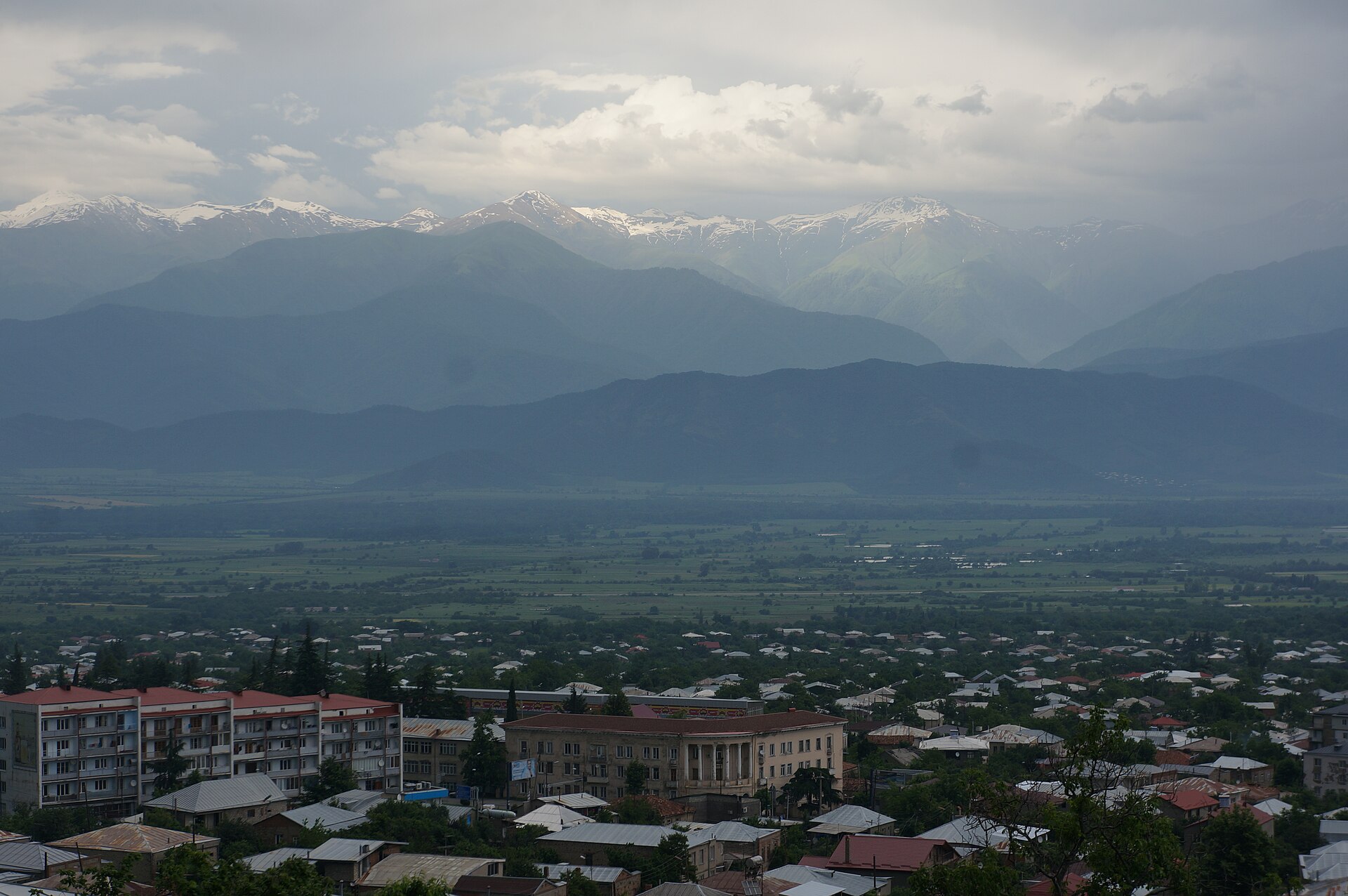
First, Sighnaghi photographs better. The walled town on a ridge with the Alazani valley below is the postcard most concierges have seen. Telavi sits on a slope inside the valley, not above it, so the panorama lives at the edges of town rather than in the center. The first impression is less dramatic.
Second, the hotel inventory in Telavi looked thin for a long time. Until the mid-2010s, the choice was a Soviet-era property in town or a guesthouse in a village fifteen minutes away. That has changed. Three properties in or near Telavi now compete on the same axis as the better Sighnaghi options, and one of them is unambiguously better-located for what guests come to Kakheti to do.
The fixable part is the framing. Stop treating Telavi as the photo stop. Start treating it as the base from which the cellars are 20 minutes away — which is how we plan a Kakheti trip by private chauffeur.
The 20-kilometre radius
A Telavi base puts the following inside an hour-round-trip drive: Tsinandali (the Chavchavadze estate and the museum), Napareuli (Twins Wine Cellar and the qvevri museum), Kvareli (Khareba Tunnel and the lake), Kisiskhevi (Schuchmann), Velistsikhe, Akhmeta, and the road that runs along the foothills of the Caucasus toward Pankisi.
From Sighnaghi, the same set of stops adds 45 to 60 minutes each way. That means a Telavi morning visit lands at the cellar at 10am with no early start; the same visit from Sighnaghi means a 9am departure to land at 10am.
Two hours of driving per day saved over a three-night stay is six hours, which is one extra winery, one extra meal in the courtyard, or one extra slow afternoon in the hotel. Concierges who care about pacing notice this immediately; it is the same arithmetic that makes a multi-day chauffeur booking worth more than a run of separate day hires.
Three hotels that earn the slot
Schuchmann Wines & Spa Hotel (Kisiskhevi, 15 minutes from Telavi). The first of the modern wine-hotel properties, opened 2008. Built into a working winery, which means breakfast is at the same building where the qvevri sits underground. Rooms have the polished international-hotel finish that nervous guests want; the cellar visit is on the property itself. The spa is genuinely good. The reservations team works in English and German. This is the one for guests who want comfort certainty.
Lopota Lake Resort (Napareuli, 25 minutes from Telavi). Built around an artificial lake at the foot of the Caucasus, opened in the early 2010s. Wider amenity set than Schuchmann: horseback, archery, a wine cellar of their own. Useful for guests with children or for groups that want the resort experience rather than the wine-immersion experience. The cellar is decent but not the reason to come; the setting is.
Royal Batoni (Kvareli, 30 minutes from Telavi). A more recent opening, on the lake at Kvareli with views to the Caucasus. Tighter than Lopota, more design-led, and the food is the best of the three. The downside is the distance from Telavi proper and from the central wine corridor; useful for a guest who wants to combine wine days with non-wine days.
We’ve driven all three, in every car we run, more times than we can usefully count. The default recommendation depends on what the guest asks for first. Comfort and certainty: Schuchmann. Activities and space: Lopota. Design and food: Royal Batoni.
The Alazani at 8am
The case for a Telavi base lives in the morning. The Alazani valley before 10am is empty. The light is low and the mountains are clean. The cellars do not open to walk-ins until 11am, but the road through them does, and the road is part of the visit.
A 7:30am breakfast at Schuchmann, then a 30-minute drive north on the secondary road through Kondoli, Velistsikhe, and into the foothills. At 8:30am the only other cars are tractors. By the time the first cellar visit is booked at 10:30am, your guest has already seen the part of Kakheti that doesn’t make the brochures.
From Sighnaghi, this morning does not exist. By the time you’ve driven down and across the valley, the tour buses are already at the first cellar.
Where Telavi is the wrong call
A single night in Kakheti is too short to justify a Telavi base. The town is not the destination; the cellars are. If your guest has one night, put them at the cellar (Schuchmann’s rooms, the Pheasant’s Tears guesthouse in Sighnaghi, or Twins’ rooms in Napareuli). Save Telavi for stays of two nights or more.
A late arrival from Tbilisi makes Telavi awkward as well. Sighnaghi is 90 minutes from the airport; Telavi is closer to two hours, and the last 30 minutes of the drive are on roads where the headlights matter. If the guest arrives after 7pm, keep them at one of the Tbilisi hotels we drive to most or route them to Sighnaghi for the first night, and shift the base on day two.
Rtveli season (early September to mid-October) is a special case. During rtveli, the cellars themselves often offer rooms or meal-and-bed combinations that take precedence over any hotel choice. We cover this separately in Rtveli in Kakheti.
The booking note
For multi-night Kakheti stays where the guest wants to spend their days in cellars rather than in the car, ask about Telavi rather than defaulting to Sighnaghi — that pattern is what our multi-day and corporate chauffeur service is built for. Tell us the profile — comfort, activities, or design — and we will match. From Tbilisi, the drive in is 90 minutes via the Gombori Pass or two hours via the southern route; we usually recommend the Gombori for the views and the southern route in winter.
The full two-day version is the wine roads of Kakheti; the compressed one is Sighnaghi in a day; and the half-day that most rewards a Telavi base is the Alaverdi Monastery cellar, twenty-five minutes north. Send us the dates and we will build the rest around them.